
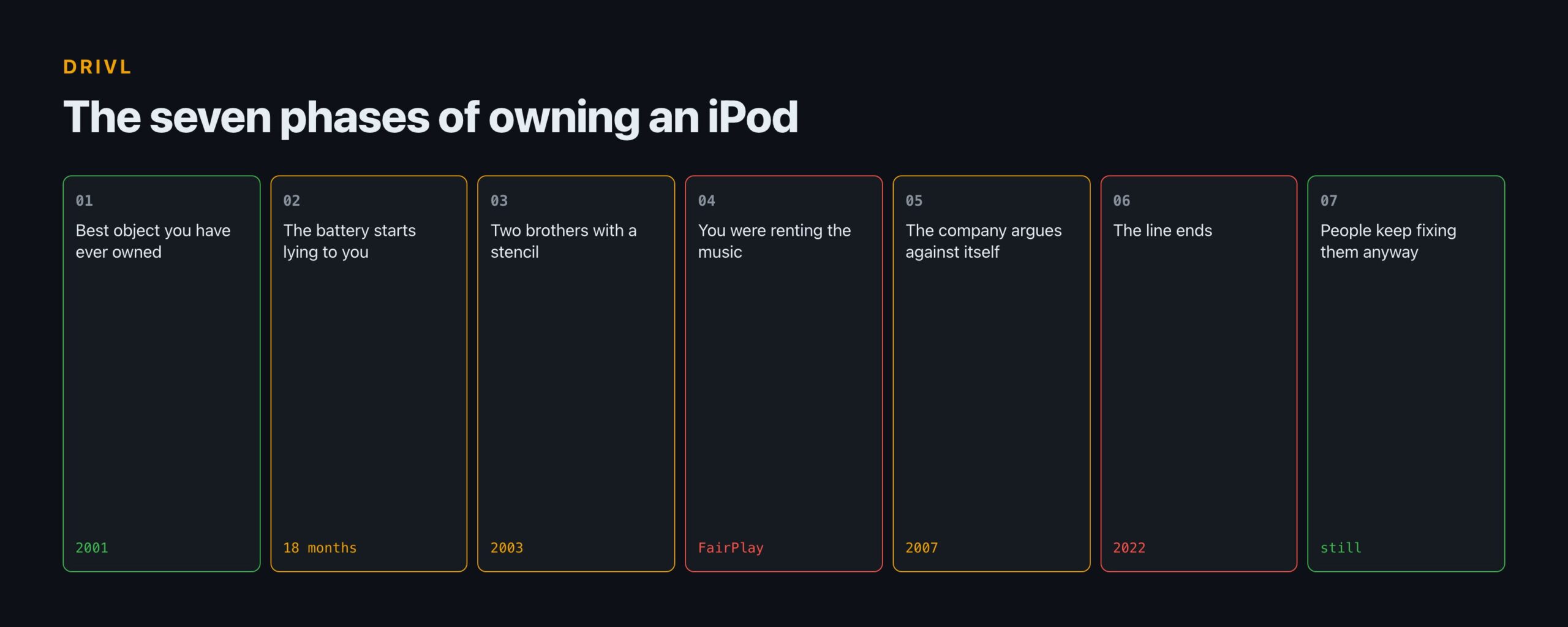
The first phase of owning an iPod was choosing the music. A later phase involved finding the cable you had put somewhere sensible. Between those points, the little player acquired a surprising amount of baggage about batteries, repairs and the files inside it.
These seven phases follow that history. They are a retrospective, not a claim that every owner had the same experience.
1. You take the library with you
The original iPod arrived in 2001. A dedicated music player gave the library a physical home: something to charge, carry and hand to a friend without handing over everything else on your computer.
The object became part of the ritual. Pick an album. Find the headphones. Check the battery. Leave the house. The Hypercolor craze had offered a different kind of gadget-like novelty a decade earlier; the iPod had a daily job to keep doing after the novelty wore off.
2. The battery becomes the expensive part
In 2003, The Globe and Mail reported a $255 service quote after Casey Neistat’s iPod battery failed. That was close enough to replacement cost to make the repair question feel absurd.
The campaign that followed made an 18-month battery life famous. That figure described the complaint, not a universal expiration date for every iPod. The practical grievance was simpler: an otherwise useful device needed a part its owner could not easily replace.
3. A repair complaint becomes a short film
Casey and Van Neistat made iPod’s Dirty Secret, combining the service complaint with footage of a stencil applied to Apple advertising. The film gave an invisible worn-out component a very visible place in the product’s story.
Apple also introduced a $99 battery-replacement program. Contemporaneous iLounge coverage reported a dispute over whether the film should direct viewers to that existing repair option. The complaint needed to account for the remedy too.
The film’s appeal is easy to understand without assigning it sole credit for a policy change. A support call had ended at a price the owner found unreasonable. The video let everyone else listen.
4. Moving the music exposes the restrictions
Early iTunes Store purchases used Apple’s FairPlay copy protection. The iPod itself could also play unprotected files, including MP3s. Those are different facts, and folding them together makes the device sound more restrictive than it was.
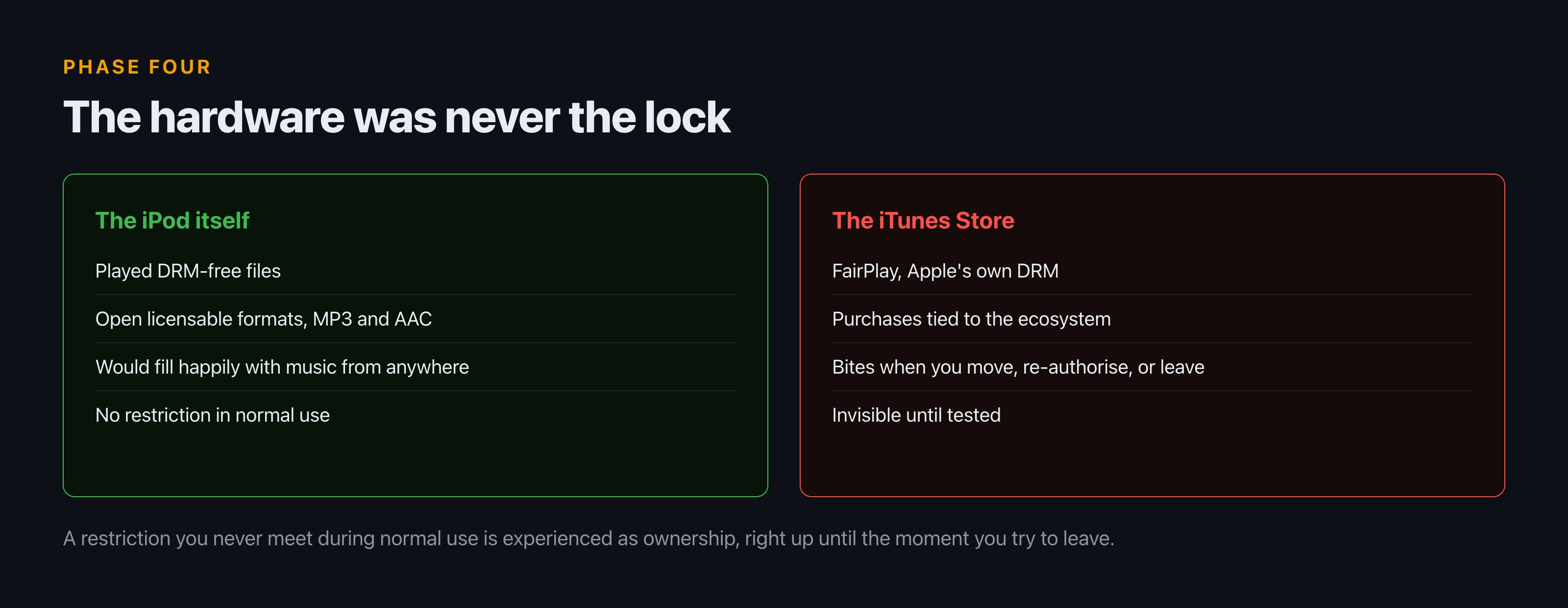
The inconvenience appeared when someone wanted to use a protected purchase elsewhere. A library could feel portable while it stayed inside the arrangement it was sold for. Changing players made the conditions more noticeable.
5. Steve Jobs argues for DRM-free music
In his February 2007 letter Thoughts on Music, Jobs argued that copy protection had failed to stop piracy and favored stores selling music in interoperable, unprotected formats.
It was an unusually public explanation of the restrictions around a purchase. The customer’s concern was less grand than the industry debate: would the song still play on the next device?
6. Apple sells the last of the line
On May 10, 2022, Apple announced that the iPod touch would remain available while supplies lasted. It was the end of new iPod sales, rather than a command for the existing players to stop.
The distinction matters when a product is discontinued. A working device can remain useful after the catalog moves on. The Google products that shut down had different endings, especially where a service had to keep running for customers to use it.
7. The old player becomes a repair project
Owners in a MacRumors battery-replacement discussion weigh the repair against how much they actually use the player. The useful question is whether they want this particular device working again.
A discontinued music player can still be a good music player. It may need servicing, a compatible cable and a library someone has kept. None of those is quite as exciting as the first unboxing. They are what lets the thing stay out of the junk drawer.